![What Are the Different Types of Laser Treatments for Skin]()
You have many options when it comes to laser treatments for skin. The main types of laser treatments include ablative, non-ablative, fractional, IPL, vascular, pigment-reducing, and hair removal lasers. These treatments address a wide range of skin concerns, such as wrinkles, pigmentation, scars, and unwanted hair. The global market for these procedures has seen rapid growth, with laser hair removal leading in popularity. Each type offers unique benefits and risks, as shown below:
Type of Laser Treatment | Benefits | Risks |
Ablative | Removes damaged skin layers, improves texture | Scarring, longer recovery |
Fractional | Stimulates repair, minimal downtime | Redness, swelling |
Non-ablative | Boosts collagen, little downtime | Multiple sessions needed |
Vascular | Treats red lesions, rosacea | Pigment changes, scarring |
Pigment-reducing | Breaks up brown lesions | Temporary discoloration |
Hair Removal | Reduces unwanted hair, long-lasting results | Burns if not done correctly |
You can feel confident exploring these options to find the best treatment for your skin needs.
Key Takeaways
Explore various laser treatments like ablative, non-ablative, and fractional to address skin concerns.
Ablative lasers remove damaged skin layers for dramatic results but require longer recovery times.
Non-ablative lasers stimulate collagen production with minimal downtime, making them ideal for busy lifestyles.
Fractional lasers promote healing and collagen production while balancing comfort and effectiveness.
Consult a professional to choose the right laser treatment based on your skin type and concerns.
Follow pre-treatment and aftercare instructions to maximize safety and achieve the best results.
Laser hair removal offers long-lasting results by targeting hair follicles, making it a popular choice.
IPL treatments provide a versatile solution for multiple skin issues, including pigmentation and redness.
Types of Laser Treatments
You have access to a wide range of types when it comes to laser treatments for skin. Each option targets specific concerns and delivers unique benefits. Understanding the different types of laser treatments helps you make the best choice for your skin goals.
Tip: Knowing the mechanism of each laser treatment empowers you to select the right solution for your needs.
Ablative Lasers
Ablative lasers remove the outer layers of skin through vaporization. You can achieve dramatic improvements in texture, deep wrinkles, and scars. These types require careful planning due to longer recovery times and potential side effects.
CO2 Laser
CO2 lasers stand out for their ability to treat deep wrinkles and scars. You benefit from significant skin resurfacing as the laser vaporizes damaged skin, revealing healthier layers underneath. Most patients see lasting results after just one session. Recovery can take four to six weeks, but the improvements often last for years. You may experience redness, swelling, or sensitivity, which usually resolve within a few weeks. If you want dramatic results, this type offers a powerful solution.
Erbium:YAG Laser
Erbium:YAG lasers provide a gentler approach compared to CO2 lasers. You can target moderate wrinkles, fine lines, and superficial scars. This type removes thinner layers of skin, resulting in less downtime and fewer side effects. Healing typically takes seven to twenty-one days. You enjoy smoother, brighter skin with minimal discomfort. If you prefer a faster recovery, Erbium:YAG lasers deliver effective results.
Note: Ablative lasers are clinically proven to improve deep wrinkles and scars. You should expect temporary redness, itching, and sensitivity after treatment.
Non-Ablative Lasers
Non-ablative lasers heat the underlying tissue without removing the skin’s surface. You stimulate collagen production, which helps treat mild to moderate skin issues. These types offer minimal downtime and fewer side effects, making them suitable for busy lifestyles.
Nd:YAG Laser
Nd:YAG lasers target deeper skin layers. You can address fine lines, wrinkles, and pigmentation issues. This type is ideal for skin resurfacing and treating acne scars. You experience gradual improvements with little to no recovery time. If you want to enhance your skin texture without significant downtime, Nd:YAG lasers are a smart choice.
Pulsed Dye Laser
Pulsed Dye lasers focus on vascular concerns. You can treat redness, rosacea, and visible blood vessels. The laser targets hemoglobin in blood vessels, reducing unwanted redness and improving overall skin tone. You benefit from a gentle treatment with minimal discomfort. If you struggle with vascular issues, Pulsed Dye lasers offer an effective solution.
Callout: Non-ablative lasers are perfect for reducing discoloration, improving wrinkles, and enhancing skin texture. You enjoy gradual results with fewer risks.
Fractional Lasers
Fractional lasers create microthermal zones in the skin. You promote healing and collagen production while minimizing downtime. These types balance comfort and effectiveness, making them popular for skin rejuvenation.
Fraxel Laser
Fraxel lasers treat fine lines, mild wrinkles, pigmentation issues, and overall skin texture. You undergo multiple sessions, each spaced about a month apart. Downtime is minimal, usually two to four days of redness and flaking. You see gradual improvements in skin quality and tone. If you want a comfortable treatment with visible results, Fraxel lasers are a great option.
Fractional CO2 Laser
Fractional CO2 lasers combine the power of ablative technology with fractional delivery. You target deep facial wrinkles and atrophic scars. This type offers long-term improvements in texture and appearance. Downtime ranges from seven to fourteen days, with crusting and healing. You may need one or two sessions for optimal results. If you seek dramatic changes with enhanced safety, fractional CO2 lasers deliver outstanding outcomes.
Table: Mechanisms of Action for Different Types of Lasers
Type of Laser | Mechanism of Action |
Ablative Lasers | Remove outer skin layers through vaporization, effective for deep resurfacing and significant skin issues. |
Non-Ablative Lasers | Heat underlying tissue to stimulate collagen production, treating mild to moderate skin issues with minimal downtime. |
Fractional Lasers | Create microthermal zones for skin treatment, promoting healing and collagen production with moderate downtime. |
Pulsed Dye Lasers | Target blood vessels and hemoglobin, effective for vascular lesions and redness. |
Table: Comparing Ablative and Non-Ablative Laser Treatments
Feature | Ablative Lasers | Nonablative Lasers |
Treatment Approach | Vaporizes top layers of skin to reveal new skin | Applies heat/light without destroying top layers |
Recovery Time | 4 to 6 weeks | Fewer sessions, shorter recovery |
Results | Dramatic, long-lasting improvements | Gradual, less dramatic results |
Side Effects | Longer recovery, potential for hypopigmentation | Fewer side effects, suitable for darker skin tones |
Conditions Treated | Scars, wrinkles, discoloration, uneven texture | Discoloration, wrinkles, skin texture improvement |
Common Side Effects of Ablative Laser Treatments:
You can expect most side effects to resolve within a few weeks. Redness may persist for three to six months, especially after CO2 laser treatments.
Table: Indications for Fractional Laser Treatments
Skin Concern | Description |
Wrinkles and skin rejuvenation | Lasers improve skin quality, tighten skin, and reduce wrinkles, with various devices available. |
Scars | Laser therapy enhances the appearance of scars from various causes, promoting healing and remodeling. |
Hyperpigmentation/sun spots | Fractional lasers can treat hyperpigmentation and sun spots effectively. |
You have many types of laser treatments available. Each type offers unique benefits and addresses specific skin concerns. By understanding the different laser treatments, you can confidently choose the best option for your needs.
Laser Skin Treatments for Common Concerns
![Laser Skin Treatments for Common Concerns]()
Skin Resurfacing
You can transform your skin with laser skin resurfacing. This approach targets deep wrinkles and scars, giving you smoother and younger-looking skin. You have several options for skin resurfacing, each with unique benefits.
Deep Wrinkles
You want to erase deep wrinkles and restore a youthful look. CO2 laser skin resurfacing offers aggressive treatment for severe wrinkles and sun damage. You see dramatic results after just one session. Fraxel laser skin resurfacing works well for fine lines and texture issues. You experience moderate downtime, similar to a sunburn. Erbium lasers provide precision, vaporizing damaged layers with less heat. You heal faster and enjoy smoother skin.
Tip: Choose CO2 laser skin resurfacing for deep wrinkles if you want powerful results. Select Fraxel or Erbium for milder wrinkles and faster recovery.
Scars
You can reduce scars from acne, injury, or surgery with laser skin resurfacing. CO2 laser skin resurfacing treats severe acne scars and delivers lasting improvements. Fraxel laser skin resurfacing targets texture issues and mild scars. You benefit from multiple sessions and gradual results. Erbium lasers help you achieve even skin texture with less swelling and lower risk of complications.
Laser Treatment | Description | Recovery Time |
CO2 Laser Resurfacing | Aggressive treatment for deep wrinkles, sun damage, and severe acne scars. | 1-2 weeks minimum |
Fraxel | Effective for texture issues like acne scars and fine lines. | Moderate, similar to sunburn |
Erbium | Precise targeting for smoother skin and faster healing. | Shorter, less swelling |
Pigmentation & Texture
You can address age spots and sun damage with laser skin treatments. These solutions target pigmentation and improve skin texture, helping you achieve a brighter complexion.
Age Spots
You want to fade age spots and uneven tone. IPL therapy stands out for treating various skin concerns, including pigmentation. Laser skin resurfacing with ablative lasers removes outer layers, promoting new tissue growth. You see improvements in deep wrinkles, scars, and uneven tone. Non-ablative lasers stimulate collagen and address mild discoloration with minimal disruption.
Type of Laser | Mechanism of Action | Benefits |
Ablative Lasers | Remove outer skin layers, promoting new tissue growth. | Improves deep wrinkles, scars, and uneven skin tone. |
Non-Ablative Lasers | Target deeper skin layers, stimulating collagen production without surface removal. | Addresses fine lines and mild skin discoloration with minimal disruption to the skin barrier. |
Sun Damage
You can reverse sun damage with laser skin resurfacing. Technologies like IPL and fractional laser resurfacing show reliable improvements in skin texture and pigmentation. You benefit from clinical studies that validate IPL therapy for various skin concerns. Laser treatments target melanin, leading to improved pigmentation and a healthier look.
Callout: Erbium lasers offer less swelling and faster healing, making them ideal for achieving smooth and even skin texture.
Vascular Issues
You can treat redness, rosacea, and spider veins with specialized laser skin treatments. These options target blood vessels and help you achieve clear, even skin.
Rosacea
You want to reduce facial redness and rosacea. Pulsed dye lasers emit light absorbed by hemoglobin, targeting blood vessels. VBeam laser skin resurfacing delivers gradual results with minimal downtime. You see treated blood vessels fade and enjoy a more even complexion.
Spider Veins
You can eliminate spider veins and facial redness. Cutera Excel V targets vascular issues, encouraging problematic blood vessels to collapse. You experience reduced spider veins and discoloration. VBeam and pulsed dye lasers treat port-wine stains, rosacea, and spider veins effectively.
Laser Technology | Mechanism | Uses |
Pulsed Dye Lasers | Emit light at 585-595 nm absorbed by hemoglobin, targeting blood vessels. | Treats port-wine stains, rosacea, spider veins. |
Cutera Excel V | Targets vascular issues, encouraging problematic blood vessels to collapse. | Reduces spider veins, facial redness, and discoloration. |
VBeam | Minimal downtime with gradual results as treated blood vessels fade. | Effective for redness and vascular lesions. |
Emoji: You can achieve clearer, smoother skin and boost your confidence with laser skin treatments for common concerns.
Hair Removal Lasers
![Hair Removal Lasers]()
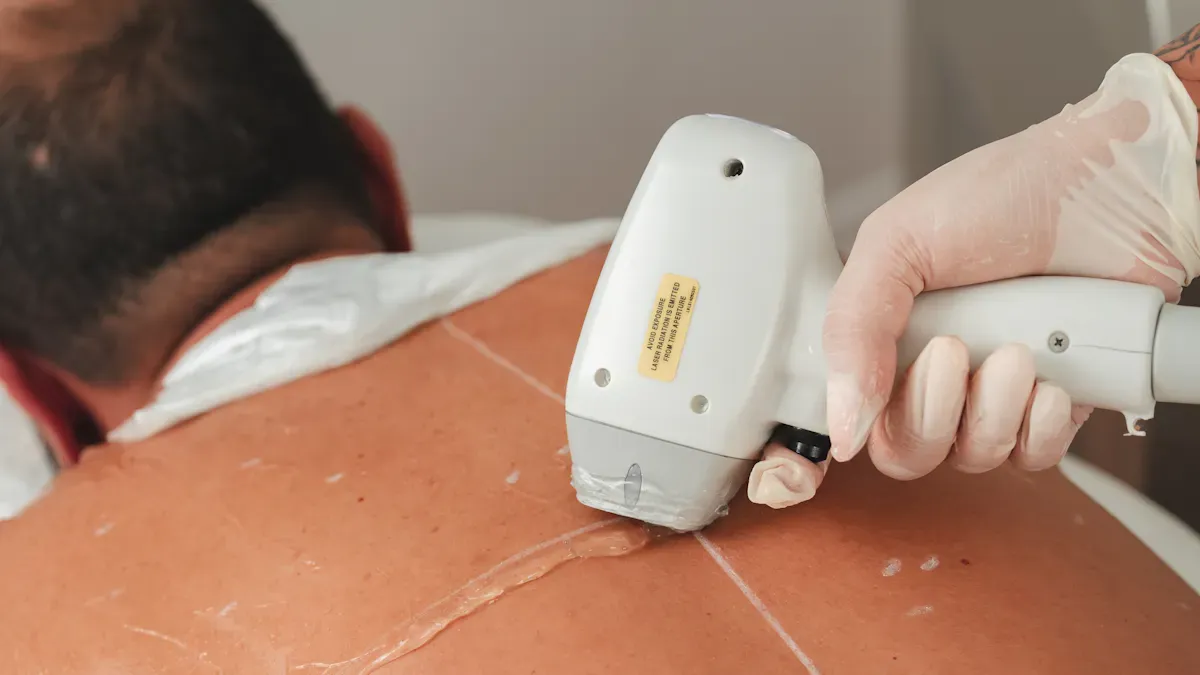
If you want smooth, hair-free skin, laser hair removal offers a powerful solution. You can trust this technology to deliver long-lasting results and boost your confidence. Let’s explore how these lasers work, what sets them apart, and why the Lontlaser Laser Hair Removal Machine stands out in the world of laser treatments.
How Hair Removal Lasers Work
Targeting Melanin
Laser hair removal works by sending concentrated light into your hair follicles. The pigment, or melanin, in your hair absorbs this light. The energy then destroys the follicle, stopping future hair growth. You get precise targeting, which means the laser only affects the hair, not the surrounding skin. This makes the treatment safe and effective for many people.
Recent advancements have made laser hair removal even better:
New laser types like Alexandrite, Nd:YAG, and Diode lasers treat a wider range of skin tones and hair types.
Advanced cooling systems, such as contact cooling and cryogen spray, keep your skin comfortable.
Pulse technology allows for short and variable durations, so you get precise results with less risk.
Long-Term Results
You want results that last. Laser hair removal gives you just that. After a series of sessions, you will notice a dramatic reduction in hair growth. Most people enjoy smooth skin for months or even years. The treatment works best on dark hair and light skin, but new technology now makes it effective for more skin and hair types.
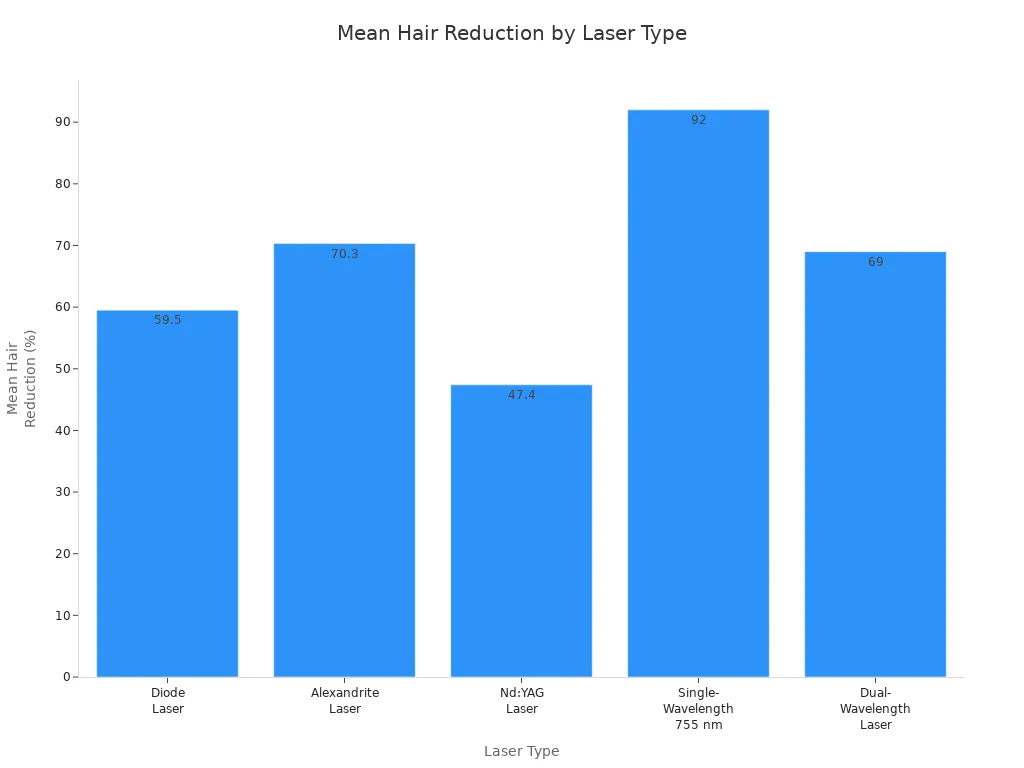
Here’s how different lasers compare for hair reduction:
Laser Type | Mean Hair Reduction (%) |
Diode Laser | 59.5 |
Alexandrite Laser | 70.3 |
Nd:YAG Laser | 47.4 |
Single-Wavelength 755 nm | 92 |
Dual-Wavelength Laser | 69 |
![Bar chart comparing mean hair reduction percentages for five laser types]()
Lontlaser Laser Hair Removal Machine
Professional Use
You deserve the best technology for your skin. The Lontlaser Laser Hair Removal Machine brings professional-grade results to beauty and wellness clinics. This advanced device uses cutting-edge laser technology to target hair follicles with high accuracy. You get a comfortable experience, and your practitioner can adjust settings for your unique needs. The Lontlaser machine treats a wide range of skin types and hair colors, making it a versatile choice for everyone.
Safety Features
Your safety comes first. The Lontlaser Laser Hair Removal Machine includes advanced cooling technology to protect your skin during every session. This feature reduces irritation and keeps you comfortable. The machine also adapts to your skin tone in real time, minimizing the risk of side effects. You can trust the Lontlaser system to deliver effective results while keeping your skin safe.
Tip: Choose a professional device like Lontlaser for reliable, comfortable, and safe hair removal.
Safety Feature | Function |
Automatic skin tone adaptation | Adjusts settings in real time for your skin tone, reducing risks. |
Advanced cooling systems | Keeps your skin cool and comfortable during treatment. |
Dual-wavelength technology | Safely treats all skin types, lowering the risk of burns or irritation. |
Laser hair removal stands apart from other laser treatments. While many lasers focus on resurfacing or pigmentation, hair removal lasers target melanin in hair follicles for long-term reduction. You get smoother skin, less maintenance, and more confidence with every session.
IPL and Other Light-Based Treatments
IPL Overview
Broad Spectrum Light
You can choose IPL (Intense Pulsed Light) if you want a versatile solution for your skin. IPL uses a broad spectrum of light wavelengths, unlike lasers that focus on a single wavelength. This technology allows you to target multiple skin concerns in one session. You benefit from the ability to treat pigmentation, redness, and texture problems at the same time. IPL delivers energy to your skin, which absorbs excessive pigment and stimulates collagen production. You see brighter, smoother skin with minimal downtime.
Tip: IPL treats several issues at once, making it a smart choice for busy people who want visible results quickly.
Non-Laser Technology
You get a non-laser approach with IPL. The device emits pulses of light that reach different layers of your skin. You experience gentle heating that encourages your skin to heal and renew itself. IPL stands out because it does not remove skin layers or cause significant discomfort. You can return to your daily routine almost immediately after treatment.
Common Uses
Pigmentation
You can fade sunspots, freckles, and uneven skin tone with IPL. The broad-spectrum light targets pigmented cells, breaking down dark spots and improving your complexion. You see a reduction in hyperpigmentation and age spots after just a few sessions. IPL also helps with redness and rosacea, giving you a more even skin tone.
Skin Concerns Treated by IPL |
Sun damage |
Hyperpigmentation |
Age spots & freckles |
Spider veins |
Redness & rosacea |
Vascular lesions |
Texture problems |
Fine lines |
Hair Removal
You can use IPL for hair removal, but you should know that diode laser treatments yield higher hair reduction percentages. IPL weakens hair and can hinder laser absorption, so you may see less dramatic results compared to laser treatments. You still get smoother skin and reduced hair growth, especially if you have lighter skin and darker hair.
Benefits & Risks
You gain many benefits from IPL and other light-based treatments. You enjoy improved skin tone, reduced pigmentation, and rejuvenation of your complexion. IPL stimulates collagen production, which helps your skin look firmer and healthier. You experience little to no downtime, with mild redness or swelling that usually resolves within 24 to 48 hours.
Note: You must follow post-treatment care instructions, including sun protection and avoiding irritants, to ensure optimal healing and lasting results.
Benefits:
Risks:
Mild redness, swelling, and irritation
Rare cases of hyperpigmentation, hypopigmentation, bacterial infections, or scarring (especially with ablative treatments)
Aspect | IPL Treatment | Laser Treatment | Notes |
Light Type | Broad-spectrum multiple wavelengths | Single, focused wavelength | IPL treats multiple targets simultaneously |
Targets | Pigmentation, vascular lesions, collagen | Pigmentation, vascular, collagen, resurfacing | Different lasers for specific concerns |
Collagen Stimulation | Yes, via heating fibroblasts | Yes, ablative and nonablative options | Stimulates natural collagen production |
Optimal Sessions | 3–5 sessions, 4 weeks apart | Varies (3–6+), tailored per treatment | Maintenance every 6–12 months recommended |
Skin Type Suitability | Best for lighter skin tones | Wide range including darker types (with care) | Settings and laser choices customized |
Recovery and Side Effects | Minimal downtime, mild redness | Varies by laser type; ablative has longer downtime | Side effects are generally mild and manageable |
You can achieve clearer, healthier skin with IPL and other light-based treatments. You make a smart investment in your appearance and confidence.
Comparing Laser Treatments
Suitability by Skin Type
Sensitive Skin
You want gentle care for sensitive skin. Non-ablative lasers work best because they treat underlying layers without damaging the surface. You experience less redness and irritation. Fractional lasers also offer a balanced approach, creating micro-injuries that heal quickly. If you have sensitive skin, always ask your provider to use lower energy settings and advanced cooling systems. This reduces discomfort and helps you recover faster.
Darker Skin Tones
You deserve safe and effective results, no matter your skin tone. Non-ablative lasers are preferred for darker skin tones. These options minimize the risk of pigmentation changes. Erbium-based ablative lasers also provide a safer choice for deeper treatments. You avoid complications like hyperpigmentation or scarring when you choose the right technology.
Tip: Always consult a professional who understands how to match laser settings to your unique skin type.
Laser Type | Skin Type Suitability | Purpose |
Non-ablative lasers | Preferred for darker skin tones to minimize pigmentation risks | Suitable for milder skin concerns and maintenance |
Ablative lasers | Erbium-based options are safer for darker skin types | Chosen for severe skin aging signs and textural issues |
Matching Treatments to Concerns
Wrinkles vs. Pigmentation
You want to target wrinkles or pigmentation? Choose your treatment based on your main concern. For deep wrinkles, CO2 and Erbium lasers deliver dramatic resurfacing. These options remove damaged layers and stimulate new collagen. For pigmentation, IPL and non-ablative lasers break up dark spots and even out your skin tone. You see brighter, smoother skin with minimal downtime.
Scars vs. Texture
You can fade scars and improve texture with the right approach. Fractional lasers treat acne scars and roughness by creating tiny channels that trigger healing. Ablative lasers work well for severe scars and uneven surfaces. If you want subtle texture improvements, non-ablative lasers offer gradual results with less risk.
Callout: Match your treatment to your top concern for the best outcome. Discuss your goals with your provider to create a personalized plan.
Recovery & Downtime
You want to know what to expect after your procedure. Recovery time depends on the type of laser used.
Ablative treatments, like CO2 and Erbium lasers, usually require about a week of recovery. You may notice redness and peeling during this time.
Fractional laser resurfacing also takes about one week to heal.
Non-ablative treatments let you resume daily activities almost immediately. You might see mild redness or swelling, but these effects fade within 24 to 48 hours.
Laser Treatment Type | Recovery Time |
CO2 Laser Resurfacing | Up to two weeks |
Erbium Laser Resurfacing | One full week |
Fractional Laser Resurfacing | One full week |
You may need multiple sessions for the best results. Final improvements often appear over several months. Choose the option that fits your lifestyle and recovery preferences.
You can achieve smoother, clearer skin with the right laser treatments—just match your needs to the best technology and enjoy the transformation!
Safety and What to Expect
You want the best results from your laser skin treatment. You need to know how to prepare, what happens during the procedure, and how to care for your skin afterward. This section guides you through every step, so you feel confident and safe.
Pre-Treatment Prep
Consultation
You start with a professional consultation. Your provider examines your skin, discusses your goals, and recommends the best laser treatment for your needs. You share your medical history and any medications you take. This step ensures you get a personalized plan and reduces risks.
Instructions
You follow specific instructions to maximize safety and effectiveness:
Avoid sun exposure for at least two weeks before your appointment.
Use broad-spectrum sunscreen daily to protect your skin.
Discontinue retinoids and blood thinners as directed by your doctor.
Manage skin conditions, and take antiviral medication if you get cold sores.
Stop smoking and alcohol for one to two weeks before treatment.
On the day of your procedure, avoid new skincare products and harsh chemicals.
Tip: Preparation sets the stage for a smooth experience and optimal results.
During Treatment
Pain Management
You may feel tingling or warmth during the procedure. Your provider offers numbing creams or cooling devices to keep you comfortable. You discuss pain management options before your session, so you know what to expect.
Procedure Steps
You wear protective eyewear to shield your eyes. Your provider cleanses your skin and applies a numbing agent if needed. The laser targets your specific concern, whether it’s wrinkles, pigmentation, or hair removal. You may notice mild discomfort, but most treatments finish quickly.
Aftercare & Risks
Healing
You follow your dermatologist’s instructions for aftercare. You moisturize your skin and use gentle products. You strictly avoid sun exposure and apply prescribed ointments or dressings. You cleanse your skin gently and protect it with sunscreen.
Keep your skin moisturized.
Avoid harsh products.
Apply ointments as directed.
Practice strict sun protection.
Side Effects
You may experience redness, swelling, itching, or tiny white bumps (milia). These reactions usually fade within days. Hyperpigmentation or hypopigmentation can occur, especially in darker skin tones. Acne may develop if creams block pores. Infections are rare but possible if aftercare is neglected. Permanent scarring is uncommon with proper care.
Risk/Side Effect | Mitigation Strategy |
Eye injury | Wear protective eyewear during procedures. |
Pain, tingling, and burning | Discuss pain management with your provider. |
Bruising and swelling | Choose less aggressive treatments if prone to bruising. |
Skin infection | Keep the area clean and follow aftercare instructions. |
Hyperpigmentation/hypopigmentation | Avoid sun exposure and follow aftercare instructions. |
Scarring | Follow aftercare and avoid aggressive procedures if prone to keloids. |
Bleeding | Hold blood thinners a week before treatment if applicable. |
You protect your skin and maximize your results by following these steps. You enjoy a safer, more comfortable journey to healthier, clearer skin.
You have many options for laser and phototherapy treatments. Each method offers unique benefits. Ablative lasers remove damaged skin for deep resurfacing. Non-ablative lasers stimulate collagen with minimal downtime. Fractional lasers balance healing and effectiveness. Tattoo removal and resurfacing address stubborn marks and texture. You should always consult a qualified professional. They tailor laser and phototherapy treatments to your skin type, concerns, and recovery needs. Consider your lifestyle and desired results. Safe laser rejuvenation and tattoo removal deliver lasting improvements. You gain firmer skin, fewer side effects, and high satisfaction when you choose the right resurfacing approach.
Type | Mechanism | Uses | Recovery Time |
Ablative | Vaporizes outer skin layers | Deep resurfacing, tattoo removal | Significant |
Non-Ablative | Penetrates without removing surface | Collagen stimulation, tattoo removal | Minimal |
Fractional | Treats fractions of skin | Texture, tone, resurfacing | Moderate |
You unlock the full potential of laser and phototherapy treatments when you make informed choices and prioritize safety.
FAQ
What is the best laser treatment for wrinkles?
You should choose CO2 or Erbium lasers for deep wrinkles. These options deliver dramatic results. If you want less downtime, try fractional or non-ablative lasers. Always consult a professional to match the treatment to your skin type and goals.
Can laser treatments help with acne scars?
Yes! You can fade acne scars with fractional lasers or CO2 resurfacing. These treatments stimulate collagen and smooth your skin. For mild scars, non-ablative lasers work well. Ask your provider for a personalized plan.
Is laser hair removal safe for all skin types?
You can trust modern devices like the Lontlaser Laser Hair Removal Machine. It adapts to different skin tones and includes advanced cooling for safety. For the best results, choose a professional clinic with experience treating your skin type.
How many sessions do I need for laser hair removal?
Most people need 6 to 8 sessions for long-lasting results. You may need touch-ups for maintenance. Your provider will create a schedule based on your hair color, skin type, and treatment area.
Does laser treatment hurt?
You may feel warmth or a snapping sensation. Most clinics offer numbing creams or cooling devices. You stay comfortable during the procedure. If you worry about pain, ask your provider about pain management options.
What should I avoid before and after laser treatment?
Tip: Avoid sun exposure, tanning, and harsh skincare products before and after treatment. Use sunscreen daily. Follow your provider’s instructions for the best results and fastest healing.
How soon will I see results from laser treatments?
You may notice improvements after one session. Most people see the best results after several treatments. Your skin continues to improve for weeks as collagen builds and pigmentation fades.
Are there risks with laser treatments?
Laser treatments are safe when performed by trained professionals. You may experience redness, swelling, or temporary pigment changes. Serious side effects are rare. Always follow aftercare instructions to protect your skin.
 English